
The NZ National Eye Bank has been collecting and publishing statistics about eye banking and corneal transplantation in New Zealand since 1991.
Graphs
Donor referrals
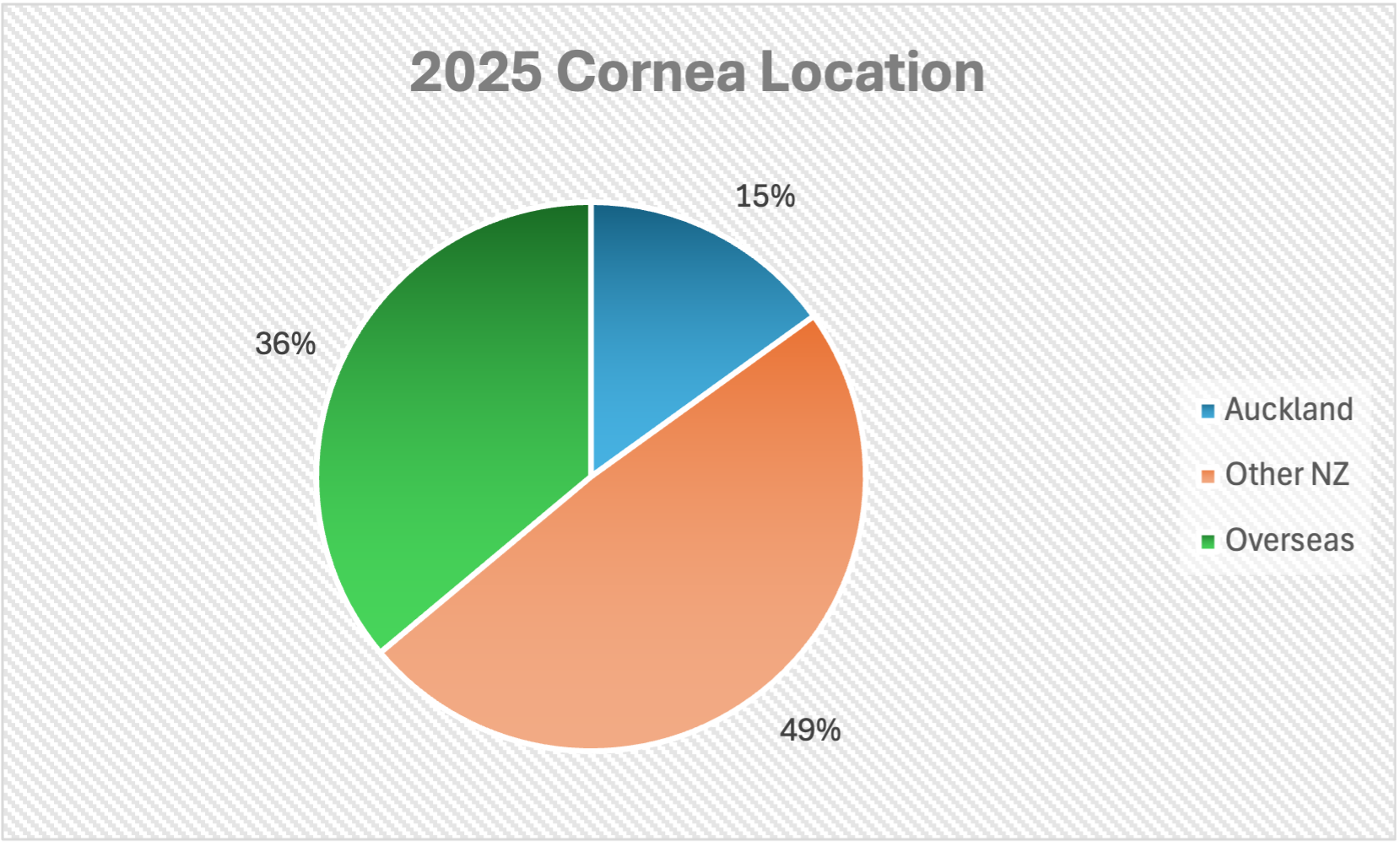
New Zealand donors were referred either by Organ Donation New Zealand (ODNZ), Middlemore Hospital Bereavement Care Services (BCS), or directly from hospices, funeral directors, or families. Nearly half of all donors in 2025 were imported from other Eye Banks in Australia or USA, though often just a single cornea.

Cornea location
Looking at just corneas, 64% were collected within New Zealand, though most of those come from outside of Auckland (where the NZ National Eye Bank is based). Auckland only provided 15% of the corneas, yet has 34% of the population, and improving this is the focus of a new Auckland-based referral programme starting in 2026.
Donor age
The majority of donors are over 50 years old.

Cornea transplants
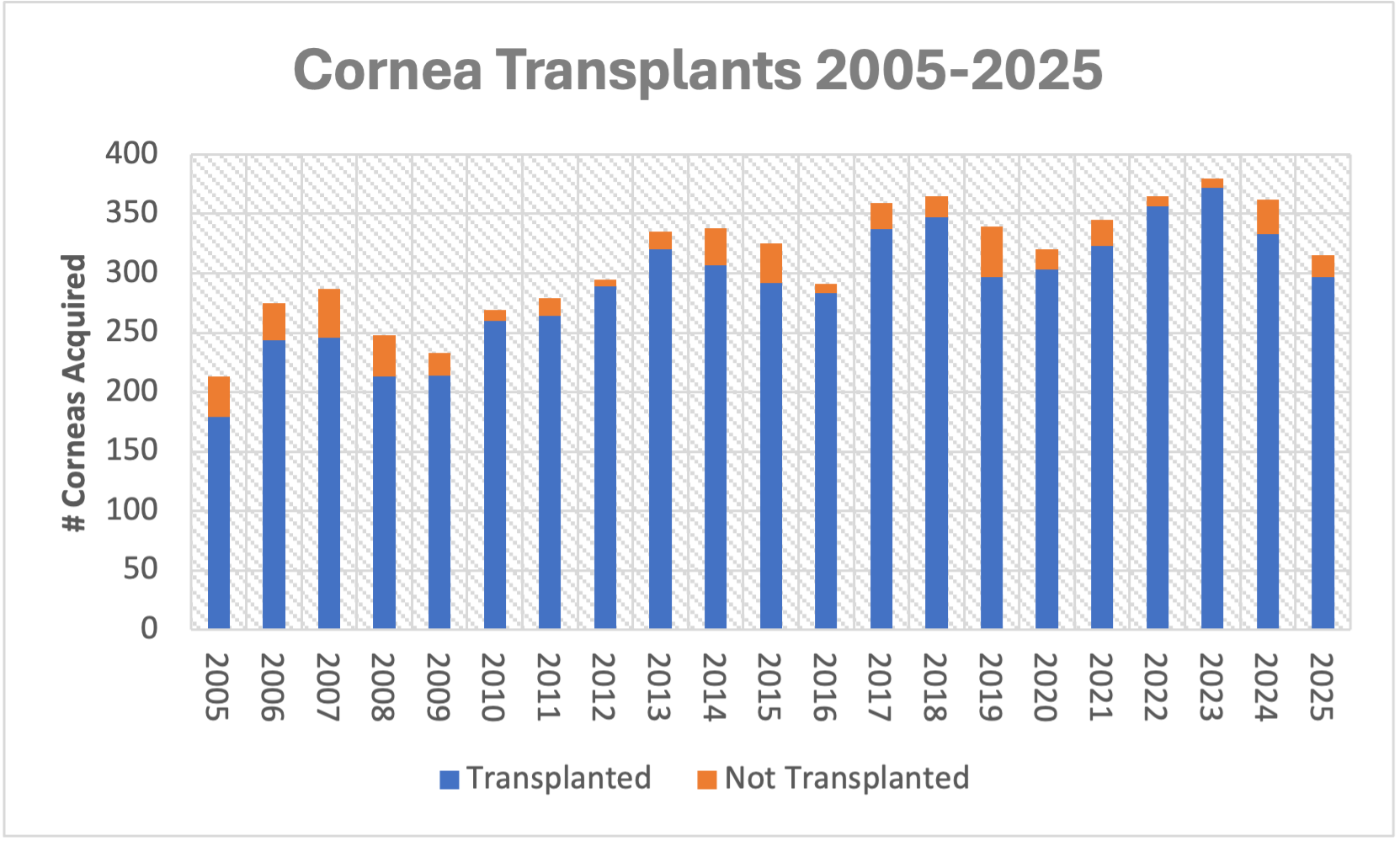
The number of corneas transplanted has been steadily rising over time. Very few are unable to be used.
Transplant location
Corneas are transplanted throughout New Zealand but the majority are transplanted in Auckland. Most corneas are transplanted in public hospitals.

Presenting disease
In New Zealand, the most common presenting disease requiring a sight-restoring corneal graft is keratoconus. Corneal transplants can eventually fail so as the recipient population grows more people are requiring a regraft.

Recipient age
The earlier peak is people with keratoconus. Later in life larger numbers of people require a corneal transplant for diseases like Fuchs' endothelial dystrophy.

Corneal transplant procedure
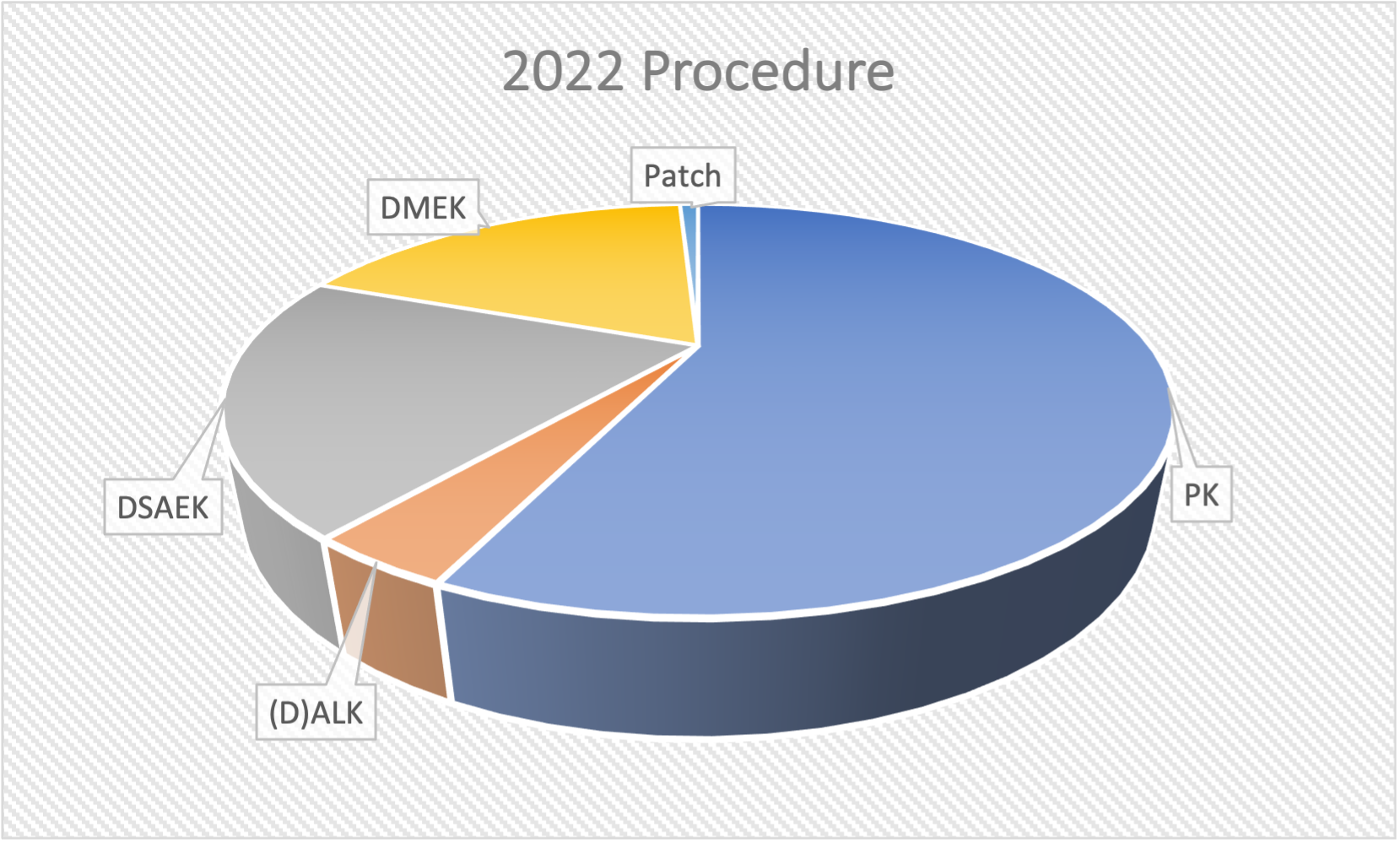
The majority of corneal transplants are full thickness Penetrating Keratoplasties (PK). Increasingly only the damaged layers of the cornea are replaced - either just the back of the cornea with a Descemet's Stripping Automated Endothelial Keratoplasty (DSAEK) or Descemet's Membrane Endothelial Keratoplasty (DMEK), or the front of the cornea with a Deep Anterior Lamellar Keratoplasty (DALK). DSAEK/DMEK is used to repair disease damage from conditions like Fuchs' endothelial dystrophy, and DALK is used to repair disease damage from conditions like keratoconus.
Sclera transplants
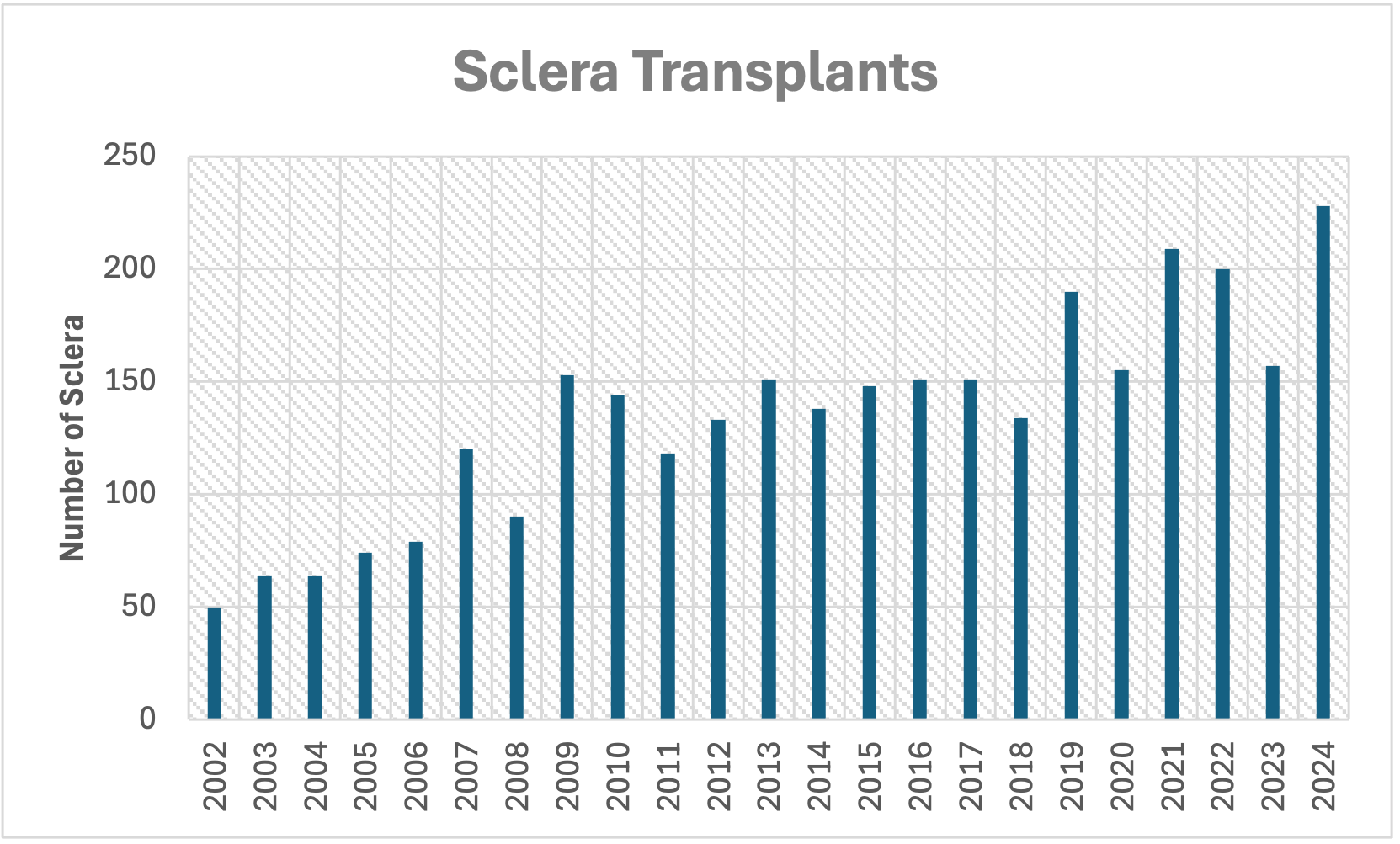
The number of sclera transplanted has increased significantly over the lifetime of the Eye Bank. Sclera are used for orbital implants when someone has had an eye removed, as an emergency patch when someone has an perforated eye, or for glaucoma surgery.
Amnion transplants
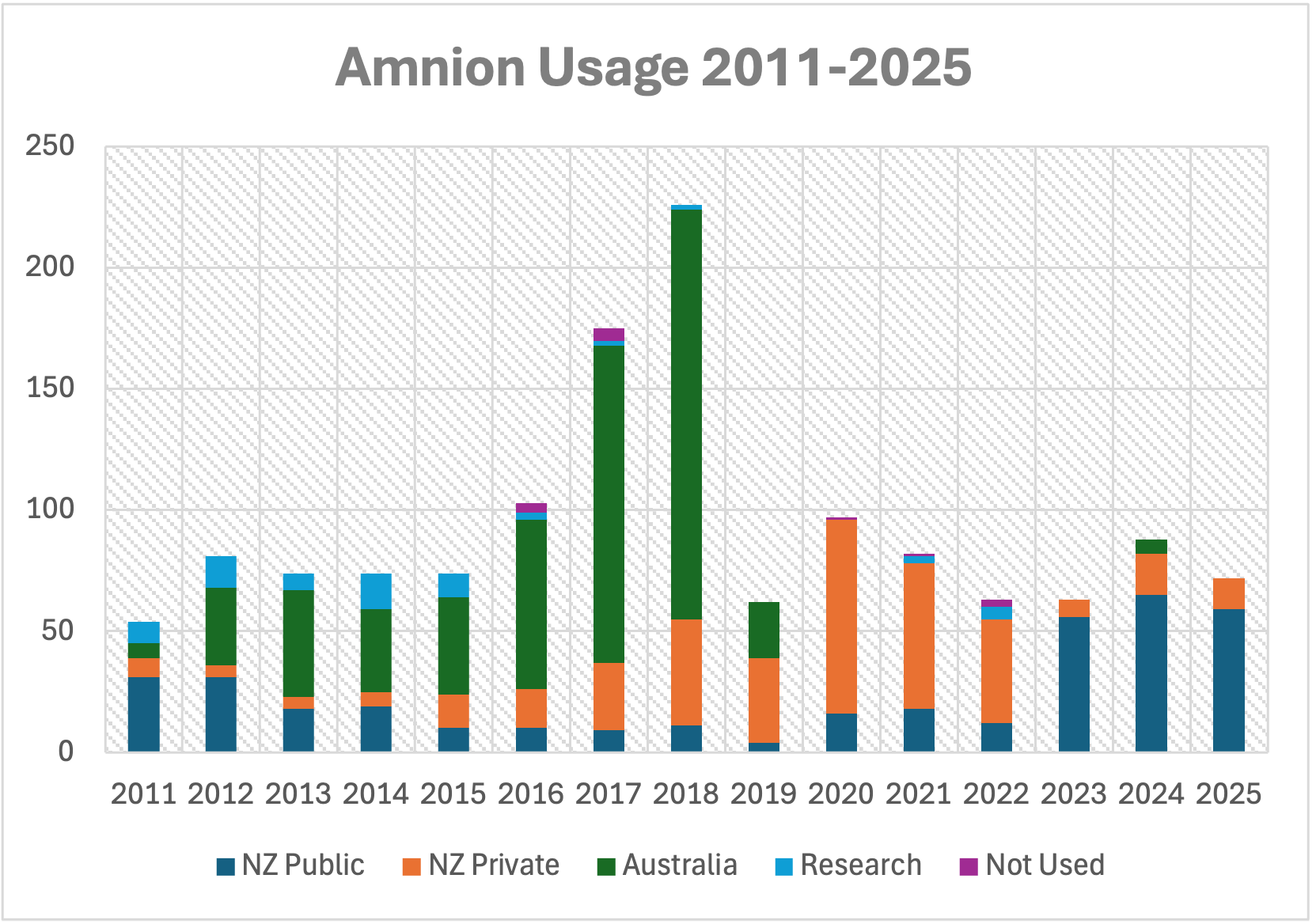
Small pieces of amnion (the front surface of the human placenta) are used as a bandage for diseased or injured eyes that are struggling to heal. The NZ National Eye Bank has been collecting and storing amnion since 2004, and even supplied Australia until 2019 when they started processing their own.
Allen NE, Niederer R, Gokul A, Brookes N, Ritchie J, McGhee CNJ. (2025). Rates of Eye Donation amongst Multi-organ Donors over a Decade (2013-2022) in New Zealand / Aotearoa. Scientific Reports 15:29377 https://doi.org/10.1038/s41598-025-15466-y
Allen N, Niederer R, Brookes N, McGhee C. (2024) Trends in Corneal Donation From 2013 to 2022 in Aotearoa-New Zealand: Impact of Donor Age, Gender, Ethnicity, and COVID-19. Cornea June 2024. doi: 10.1097/ICO.0000000000003608
Allen N, Twohill H, Watson M, Brookes N. (2024). Eye Donation: factors affecting donation rates in Aotearoa New Zealand New Zealand Optics July 2024.
Ong A, McGhee C, Brookes N, Zhang J. (2022). Corneal donation and corneal transplantation in Aotearoa. New Zealand Optics May 2022: 32-34.
Chilibeck CM, Brookes NH, Gokul A, Kim BZ, Twohill HC, Moffatt SL, Pendergrast DG, McGhee CNJ. (2022). Changing trends in corneal transplantation in Aotearoa/New Zealand, 1991 to 2020. Cornea 41(6): 680-687. doi: 10.1097/ICO.0000000000002812.
Cunningham WJ, Moffatt L, Brookes NH, Twohill H, Pendergrast D, Stewart JM and McGhee CNJ. (2012). The New Zealand National Eye Bank Study: Trends in the acquisition and storage of corneal tissue over the decade 2000-2009. Cornea. 31(5):538-45. doi: 10.1097/ico.0b013e318222c3f2
Cunningham WJ, Brookes NH, Twohill HC, Moffatt SL, Pendergrast DGC, Stewart JM, McGhee CNJ. (2012). Trends in the distribution of donor corneal tissue and indications for corneal transplantation: the New Zealand National Eye Bank Study 2000-2009. Clinical and Experimental Ophthalmology 40(2):141-7. doi: 10.1111/j.1442-9071.2011.02681.x
Patel HY, Ormonde S, Brookes NH, Moffatt L, Sherwin T, Pendergrast D and McGhee CNJ. (2011). The New Zealand National Eye Bank: Survival and visual outcome one year following corneal transplantation. Cornea. 30(7):760-4. doi: 10.1097/ico.0b013e3182014668
Patel HY, Brookes NH, Moffatt L, Sherwin T, Ormonde S, McGhee CNJ. (2005). The New Zealand National Eye Bank Study 1991-2003: A Review of the Source and Management of Corneal Tissue. Cornea. 24(5):576-82, 2005. doi: 10.1097/01.ico.0000155035.55751.b2